

Reflections from Erena Calder Hawkins (Ngāti Pāhauwera, Ngāti Tamaterā)
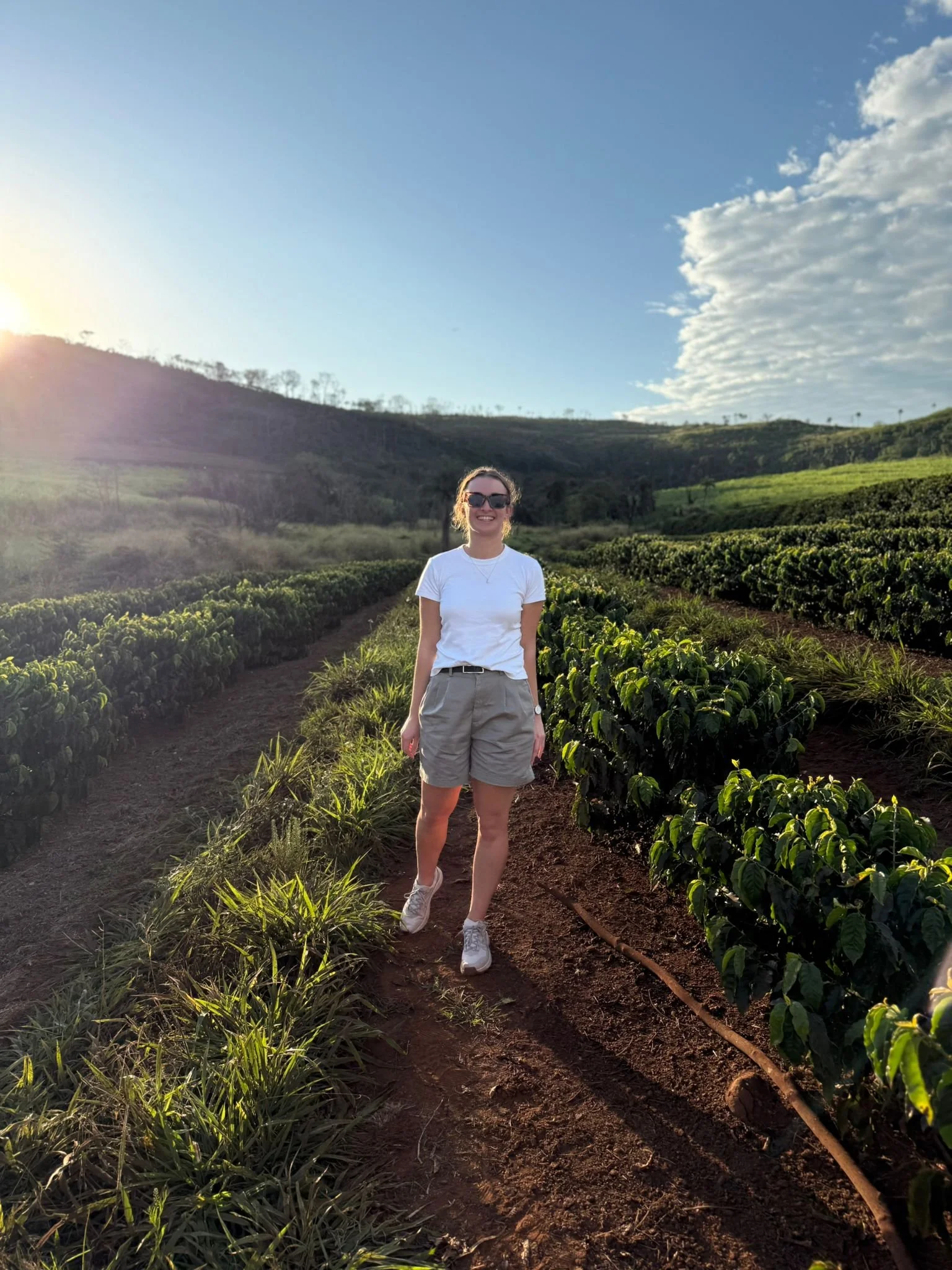
Erena walking the fields
20 JANUARY 2026: The following kōrero was captured twelve months after Erena Calder Hawkins returned from the Te Ara Pōtiki programme in the United States. As a member of the inaugural cohort, Erena has had time to reflect on how the experience shaped her confidence, career direction, and sense of possibility.
Erena completed her undergraduate studies at Waikato University, graduating with a Bachelor of Science, majoring in Biochemistry and Biotechnology, before completing a Master of Bioscience Enterprise at the University of Auckland.
During the programme, Erena was based in San Diego, completing her internship with ZeaKal, a plant-trait technology startup focused on improving crop quality. What follows are Erena’s reflections, in her own words, on the impact of Te Ara Pōtiki and how it continues to influence her thinking a year on.
1. What has shifted for you since returning home?
The biggest shift for me really came after I got home.
I applied for Te Ara Pōtiki because I was deeply passionate about the agri-food sector and wanted to deepen my understanding beyond Aotearoa. I wanted to be challenged, to learn, and to build my confidence and commercial capability. At the time, I didn’t realise just how much the experience would change how I saw myself professionally.
Coming back, I could clearly see how much I had grown.
The programme opened my eyes to possibilities I hadn’t seriously considered before. It gave me the confidence to take on new challenges and begin exploring my own entrepreneurial journey. I realised I was capable of pushing myself further and stepping into more complex, unfamiliar spaces.
A year on, that decision feels like a real turning point in my career. I don’t think I would have had the confidence to make some of the choices I’ve since made without the experience Te Ara Pōtiki gave me.
2. Which moment or experience during the programme continues to influence your decisions today?
What really stands out for me is seeing how deeply company vision was embedded within the organisations I was exposed to, particularly at ZeaKal and Plenty.
I expected things in the US to be big, but I was still surprised by just how big everything really was. I have a photo of Campbell eating an enormous turkey leg at a Fourth of July carnival, and it kind of sums it up. Everything felt oversized. The food system especially was dominated by large organisations and big chains, with very few family-owned outlets. That sense of scale and control really stuck with me.
What balanced that was the passion people had for their work. Vision wasn’t just something written on a wall or included in a slide deck. Every team member understood it and could speak to it. The vision was genuinely embedded across the organisation.
That experience has stayed with me. It’s shaped how I think about the kinds of organisations I want to be part of, and the importance of alignment between values, vision, and day-to-day work.
3. How has global exposure changed the way you think about Aotearoa, Māori, and your role within both local and international contexts?
Before going to the US, I often thought about Māori innovation showing up globally through branding or provenance stories, such as New Zealand wine or mānuka honey.
Being over there helped me see that Māori innovation is about much more than branding. It’s rooted in people.
What I noticed, both internationally and sometimes at home, was a gap between innovation and the people it’s meant to serve. There can be a real disconnect between new technologies and the farmers or communities who are directly connected to the land.
There is a clear opportunity for more people-centred innovation.
That’s where I see Māori innovators having a strong role to play. Our approaches are often grounded in relationships, long-term thinking, and responsibility to people and place. That perspective felt largely absent in the US food system, and it reinforced for me the value Māori bring to innovation at a global level.
4. If you were speaking to the next Te Ara Pōtiki cohort, what would you tell them to lean into or be brave about?
I’d tell them that the biggest value of the programme isn’t just the exposure to the US food system. For me, it was the personal and professional growth.
The programme gives you a clear outcome and then places the responsibility on you to figure out how to deliver it. That can be uncomfortable, but that’s where the real learning happens.
The growth changed how I see myself professionally.
Through that process, I learned a lot about how I work, the environments I thrive in, and the kinds of roles that suit me. That learning stayed with me long after I returned home and gave me the confidence to make a career shift.
I’d also encourage people to really lean into the connections. I was surprised by how open people were. After my internship, when I travelled to San Francisco, I reached out to people I’d never met before, and so many were willing to connect.
I was genuinely surprised by how many doors opened when people heard there was an Indigenous innovator wanting to learn. Those conversations weren’t favours. People were truly interested. That’s something I’d encourage the next cohort to take full advantage of.