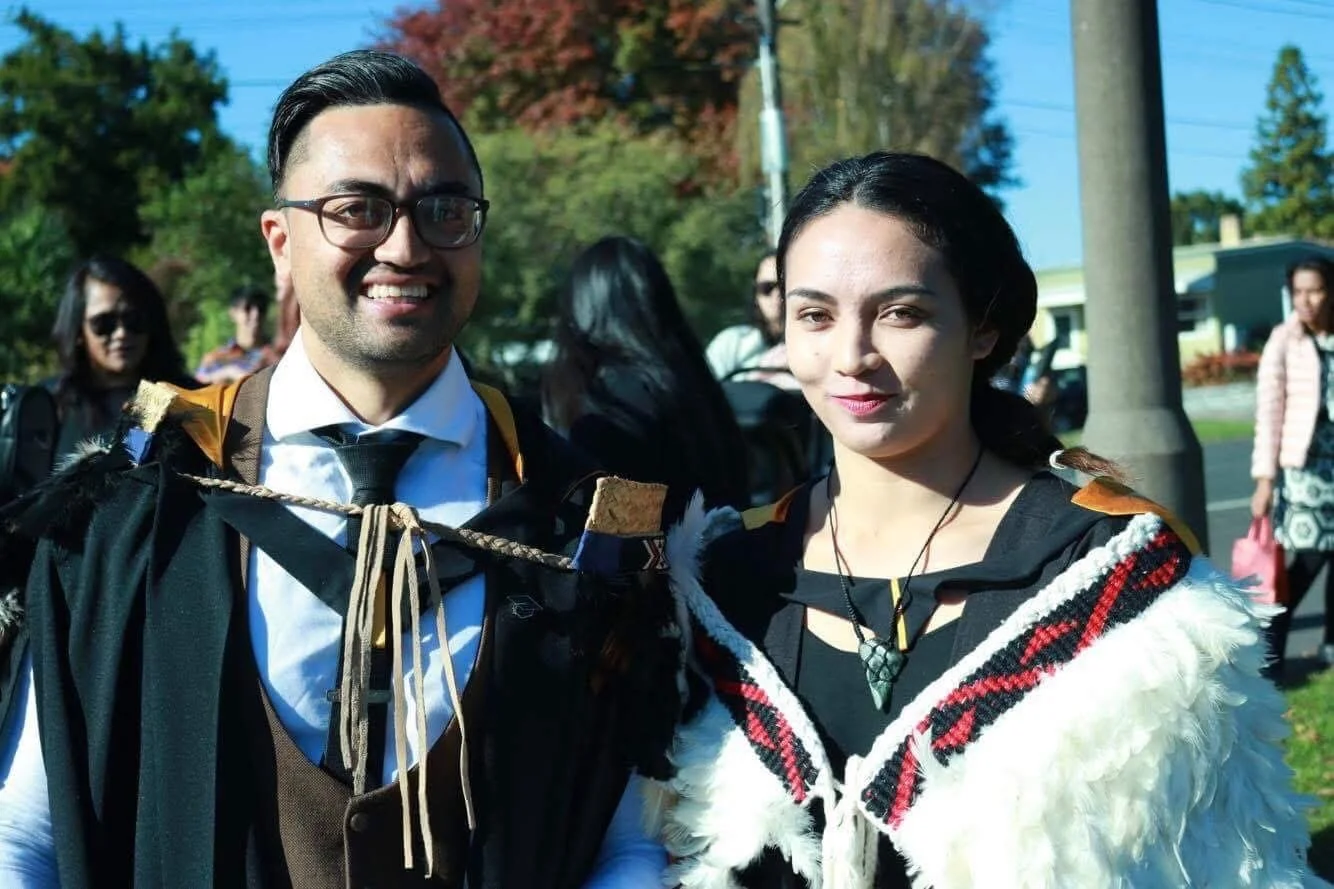
Reflections from Campbell Gin (Ngāpuhi / Ngāruahine)
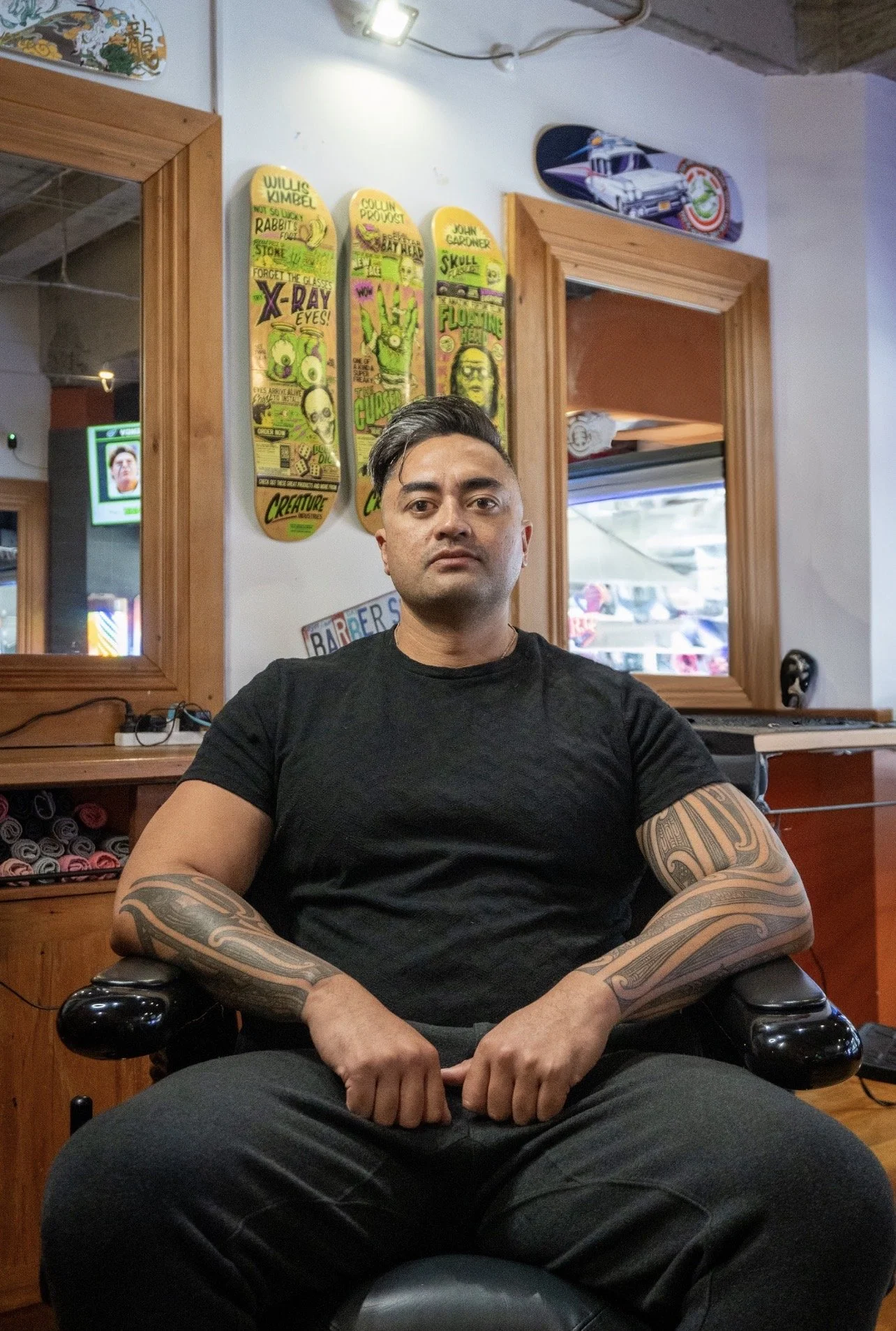
Campbell at his Wellington Business ‘Ruku Barbers’
The following conversation was captured approximately twelve months after Campbell Gin returned from the Te Ara Pōtiki programme in the United States.
His internship was with American agricultural technology company Plenty, that specialises in indoor vertical farming particularly leafy greens and, more recently, strawberries, using vertical towers, lighting, and robotics.
Campbell holds degrees in law, commerce and a master’s in business management. He speaks fluent mandarin, spent two years teaching English in China and worked in the seafood sector with Port Nicholson Fisheries.
Since returning from the Te Ara Pōtiki experience in 2024, Campbell has transitioned into entrepreneurship. In early 2025, he launched Ruku Consultants and contracted with Ngai Tahu supporting their live seafood trade with China in addition to opening Ruku Barbers in central Wellington.
The programme has shaped how he approaches risk, ambition and his role as a Māori professional operating in global contexts.
What follows is Campbell’s reflection, in his own words, on the impact of Te Ara Pōtiki.
1. What has shifted for you since returning home?
I can’t give all the credit to Te Ara Pōtiki, but it definitely reinforced something that was already there for me.
Before I left, I was comfortable. I was in a 9–5 job, I knew where my next pay cheque was coming from, and that security is hard to walk away from. But being part of the programme, and being surrounded by people who were high-achieving and ambitious, made me stop and ask myself a hard question: am I doing enough?
It’s not about feeling bad or like you’re behind. It’s more about seeing what’s possible.
That mindset shift gave me the confidence to back myself. When I came home, I left my job and went out on my own in the same industry. I’m now contracting in live seafood export to China, working with Ngāi Tahu Seafood, and building my own businesses under my new Ruku brand.
If you’re not willing to bet on yourself, how can others believe in you?
That’s probably the biggest change for me. I back myself now in a way I didn’t before.
2. Which moment or experience during the programme continues to influence your decisions today?
What really stuck with me was the environment I was exposed to. At Plenty, everyone was a go-getter. It wasn’t just a few standout people – everyone was educated, ambitious, and working hard. They must live of adrenaline.
In New Zealand, you might get a few all-stars in a company. Over there, everyone was an all-star. Just observing that made a huge impact. You could see how competitive it was, how fast-paced it was, and how much people pushed themselves. The leaders didn’t think one move ahead – they were thinking ten or twenty moves ahead. I quite liked that environment and to understand where you fit in the hierarchy of things.
There are opportunities everywhere. But fortune favours the brave.
That idea has stayed with me. You don’t find those opportunities by staying in the safe place. You’ve got to leave the comfort of what you know and take a bit of risk. That lesson shapes how I make decisions now, whether it’s business, career moves, or backing new ideas.
3. How has global exposure changed the way you think about Aotearoa, Māori, and your role within both local and international contexts?
One of the things that really excited me was doing an internship with a US company where the CEO was Māori. I’m doing an internship with a US company – and the CEO is a Māori dude! That’s rare.
Seeing Māori leadership at that level made me realise we absolutely belong in global markets, not just participating but leading.
I also think Māori bring something special internationally. We can connect with anyone, regardless of age, background, or culture. That ability to build relationships matters in global business.
But the other big realisation for me was around humility. We’re too humble. If you know your stuff, you’ve got to say it. Otherwise, internationally, it can sound like you don’t know what you’re talking about.
Now I think more about my role in creating pathways for others. In my industry, there aren’t many Māori in positions where they can open doors. If I can take a young Māori to China, show them the markets, the culture, how it all works – that’s the same kind of eye-opening experience I had in the US.
That’s how I see my role now: learning globally and applying it locally, in a way that lifts others.
4. If you were speaking to the next Te Ara Pōtiki cohort, what would you tell them to lean into or be brave about?
Be curious. Ask questions. Get to know the whole business, not just your little corner of it.
I was talking to everyone – setting up meetings, asking what they did, how their role fitted into the bigger picture. That gave me a real understanding of how complex businesses actually work. It also showed me that it’s not all rainbows and sunshine – and that’s okay.
Change doesn’t mean bad. Things shift, people move on, and that’s just part of it. Most importantly, I’d tell them to back themselves. If you know something, own it. If an opportunity comes up, take it – even if you don’t feel ready.
I wasn’t sure if they’d want an old dude like me. I thought it might be for 21-year-olds. But I applied anyway.
That decision changed everything for me. Te Ara Pōtiki gives you confidence to give it a go. What you do with that confidence is up to you.